KLEMM’S BERLIN | w-o-r-k/s
w-o-r-k/s, 2026 - MAY 01, 2026 – JUN 06, 2026
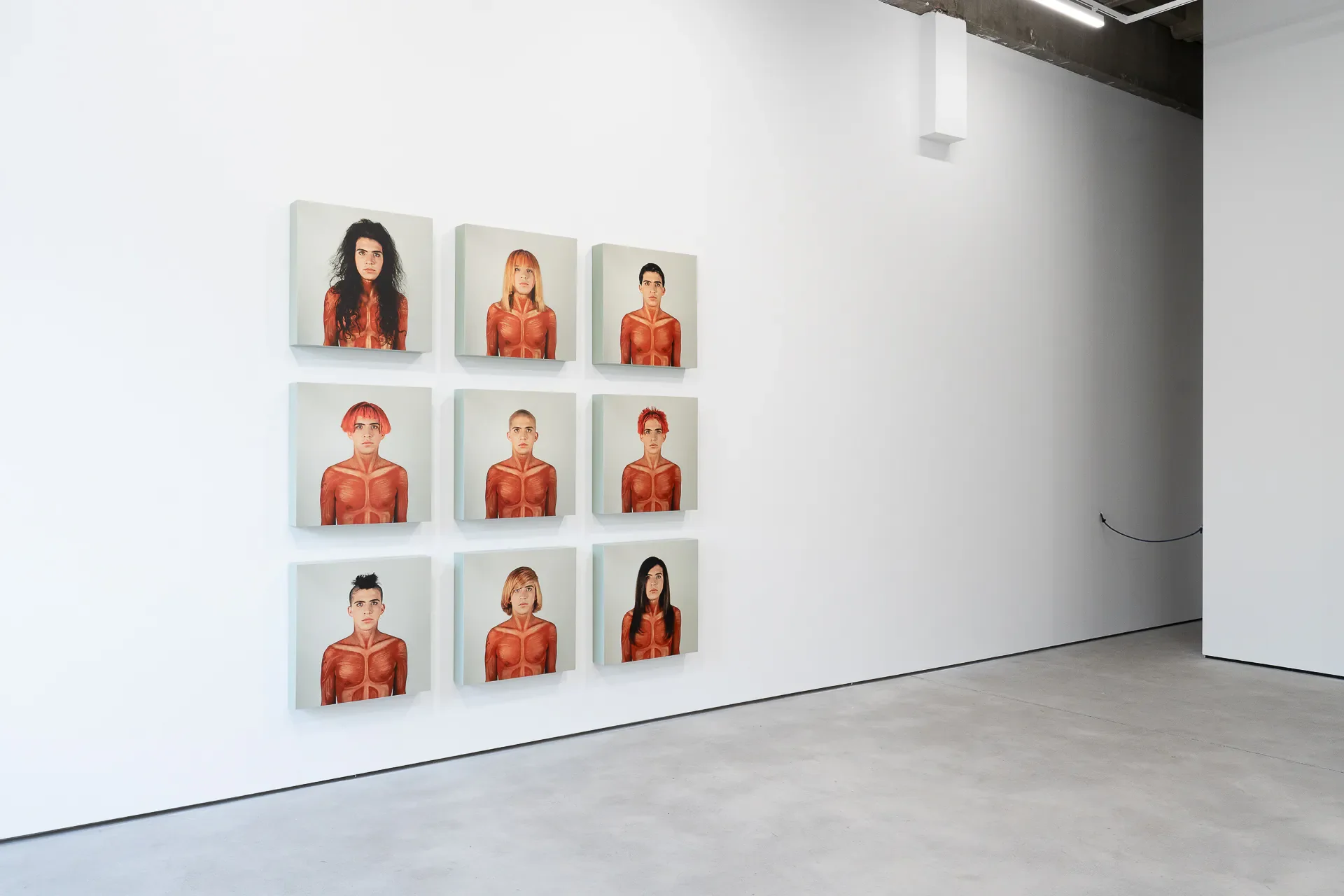
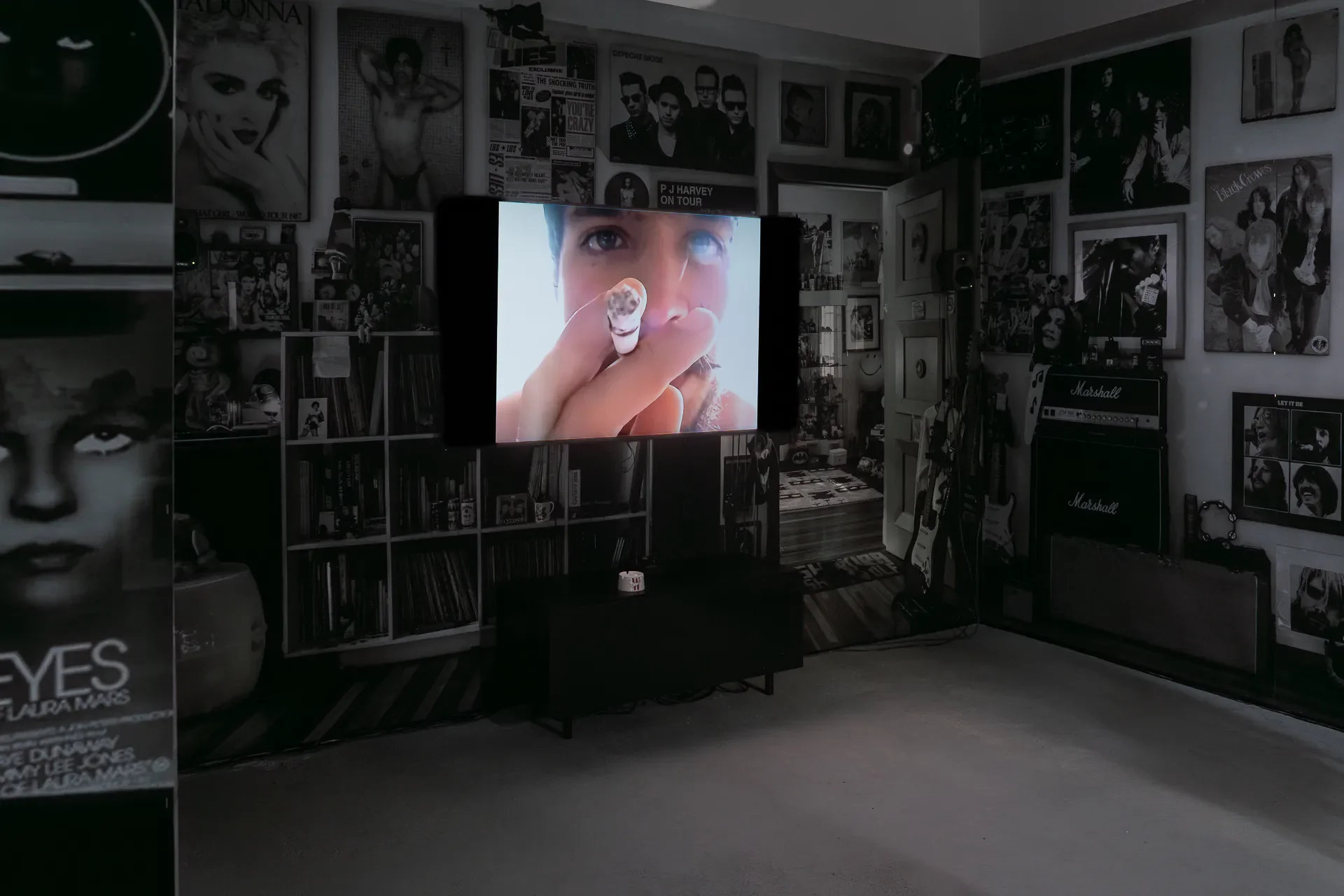
Klemm’s is proud to present w-o-r-k/s, a solo exhibition surveying two decades of Juan Pablo Echeverri’s (1978–2022) practice. Spanning the gallery’s two spaces, the exhibition explores the vast array of still and moving image-making strategies that define Echeverri’s oeuvre. By providing a portal into his multilayered universe of parody and social critique, the show highlights the precision, variety, and formal consistency of a legacy rooted in the “grid” format and portraiture – used here as a magnifying glass for both the psychological and the social.
A renowned figure in contemporary Colombian art, Echeverri developed his work through clearly demarcated cycles of images. Each series possesses a unique pictorial design and a rigorous, often surprising, formal logic. His visual vocabulary frequently extended beyond the aesthetics of “camp,” adopting an anti-aesthetic approach that challenged established notions of taste.
The performativity of identity is the central theme of Echeverri’s serial works. Using the human body and face – typically his own – as a primary subject, he acted as a collector of personalities. Through their sheer quantity and diversity, these personas demonstrate that both “norm” and “deviation” are merely social constructs.
Echeverri’s play with cultural stereotypes masks a deeper intent. His characters oscillate between subtle hints and bold, exaggerated personae, existing in the tension between comedy and existential seriousness. w-o-r-k/s highlights this complexity, showcasing the incredible variety of forms that defined his artistic vision.
Over the past three years, Echeverri’s work has undergone a substantial recontextualization, solidifying his legacy as a significant force in contemporary image-making. His pieces have been acquired by prominent institutions, including MoMA, the Pinakothek der Moderne in Munich, the Victoria & Albert Museum, Deutsche Börse, and the Museo Reina Sofía in Madrid.
w-o-r-k/s opens at Klemm’s on May 1 and will be on until June 6, 2026.
In the framework of Gallery Weekend we would also like to point out to the single/video release of Warm Star by Wolfgang Tillmans & Juan Pablo Echeverri (2016), remixed by TR/ST, Canada (2026) on May 2, 2026 from 4–6 pm.
KLEMM’S
Leipziger Str. 57/58
10117 Berlin, Germany
Opening hours
Wed–Sat 12 am–6 pm
MUSEO DE LA CIUDAD DE MEXICO | COLUMNA ROTA
COLUMNA ROTA - NOV 08, 2025 – FEB 22, 2026
“It is hard to describe what it feels like to be rejected—beyond feeling like shit—until I came across a 1944 drawing by Frida Kahlo, Preparatory Sketch for The Broken Column which depicts the artist’s shattered spine as a classical Ionic column…”
– Francisco Berzunza, Curator
This November, the Museo de la Ciudad de México will present Columna Rota/Broken Column, an exhibition of unprecedented scale that brings together more than 125 contributors to examine rejection as a structuring force in both private life and collective history. Conceived by Francisco Berzunza, Diego Aramburu, Maria Inés Parra, Gabriella Nugent, Jaime Ruiz, Francesca Manfredini, Jimena Bernot, Otro Bureau and a group of friends; with texts by Chloe Aridjis, Ruben Gallo, María Minera, Michael Synder, and Mauricio Tenorio, amongst others, the project reframes the very idea of authorship: rather than a single curatorial voice, the exhibition unfolds through a chorus of artists, writers, performers, and archival documents, positioning Mexico City at the center of a global conversation on experimental and politically engaged art.
Extending across the Museo de la Ciudad de México, the neighboring Church of Jesús Nazareno, and the surrounding streets, the exhibition situates rejection as both subject and method. Its location is itself symbolic: the intersection where legend places the first meeting of Hernán Cortés and Moctezuma II, and where an Aztec serpent monolith is embedded in the colonial palace façade. Inside the church, José Clemente Orozco’s rarely seen late mural Apocalypse (1942–44) sets the tone of defiance and rupture.
The works gathered for Columna Rota are as diverse as the experiences of exclusion they evoke. In the museum’s central courtyard, José Eduardo Barajas has created a twenty-by-twenty-meter painting suspended overhead, converting the open air into a canopy of color and shadow. Teresa Margolles, in her searing installation In the Air, releases delicate soap bubbles formed from water that once washed the bodies of the dead, collapsing beauty and mortality into the same breath. The work is rooted in Mexico’s ongoing human rights crisis, where thousands have been killed or forcibly disappeared in recent years, making the piece both a memorial and a political reckoning.
On the façade, Alfredo Jaar’s A Logo for America, a landmark of Latin American conceptual art, appears on a monumental LED screen mounted above an Aztec monolith. Mexico’s leading experimental theatre collective, Lagartijas Tiradas al Sol, will animate the building each week with performances that extend the exhibition into the register of lived time. A new intervention by Ramón Saturnino will be presented inside the museum’s galleries, transforming them into a field of barriers that draw on the language of institutional censorship. Originally conceived for the courtyards, the work’s relocation underscores the exhibition’s engagement with the politics of visibility and restriction.
Alongside these interventions, the exhibition incorporates key international voices such as Marlene Dumas, Lutz Bacher, and Dayanita Singh, whose works resonate with questions of vulnerability, intimacy, and refusal. Contributions from Naufus Ramírez-Figueroa and Juan Pablo Echeverri, two leading queer Latin American artists, deepen this conversation through their incisive explorations of identity and intimacy. Tamiji Kitagawa, the Japanese modernist, returns to Mexico for the first time in decades, reconnecting with a geography that shaped his artistic trajectory. Meanwhile, Thomas Mukarobgwa, a pioneering figure from Zimbabwe, is being foregrounded internationally for the first time since his work was championed by Alfred Barr and Tristan Tzara.
Together, these artists underscore the exhibition’s commitment to reactivating overlooked and marginalized histories within global modernism and to positioning Mexico City as a critical site for their rearticulation. Together, these works crystallize a vision of the exhibition not as a closed statement but as an unfolding script, written collectively and animated by friendship as much as by rejection. A companion publication extends this approach: structured as a script and incorporating new writing by leading Mexican authors, it functions as a literary backbone that recalls radio, theatre, and collective storytelling.
The Museo de la Ciudad de México, housed in the eighteenth-century palace of the Count of Santiago de Calimaya, is itself central to this narrative. Columna Rota thus arrives not only as an exhibition but as an act of resurrection. Entirely funded by civil society, it insists on culture as an autonomous force, independent of state neglect and institutional complicity.
By gathering nearly two hundred artists, writers, and performers in a single gesture, Columna Rota reimagines the possibilities of the group exhibition and repositions Mexico City as a cultural capital where global art history, cultural dialogue, and local urgency meet. Its scale, its independence, and its insistence on collectivity mark it as one of the most consequential exhibitions staged in Mexico in recent years, a reminder that rejection, however wounding, can also be the ground upon which new solidarities are built.
The Museum of Mexico City is overseen by the Secretaría de Cultura de la Ciudad de México. In this context, Columna Rota is an independent initiative that contributes to the museum’s programming and to the Secretariat’s efforts, while drawing on resources that extend beyond official channels. Throughout its history, the museum has hosted exhibitions of international relevance: Five Continents, One City, curated by Okwui Enwezor which aspired to become a recurring biennial; a retrospective of Pierre Soulages in 2010 that traveled from the Centre Pompidou; and Critical Fetishes: Residues of the General Economy, curated by Cuauhtémoc Medina, Marina Botey, and Helena Chávez MacGregor (2011–12).
NOV 08, 2025 – FEB 22, 2026
https://columnarota.mx
Museo de la Ciudad de Mexico
Avenida Pino Suárez #30, Colonia Centro,
Código postal 06060
GOOD NEWS | ESTATE OF JUAN PABLO ECHEVERRI
Juan Pablo Echeverri
It is our pleasure to announce the recent acquisitions of work by Juan Pablo Echeverri (1978–2022, Bogotá, Colombia) by prestigious international institutions such as the MoMA, New York, the Victoria & Albert Museum, London and the Pinakothek der Moderne, Munich.
The growing interest and awareness of Juan Pablo Echeverri’s work manifests his standing as one of the most interesting voices among contemporary visual artists from Latin America.
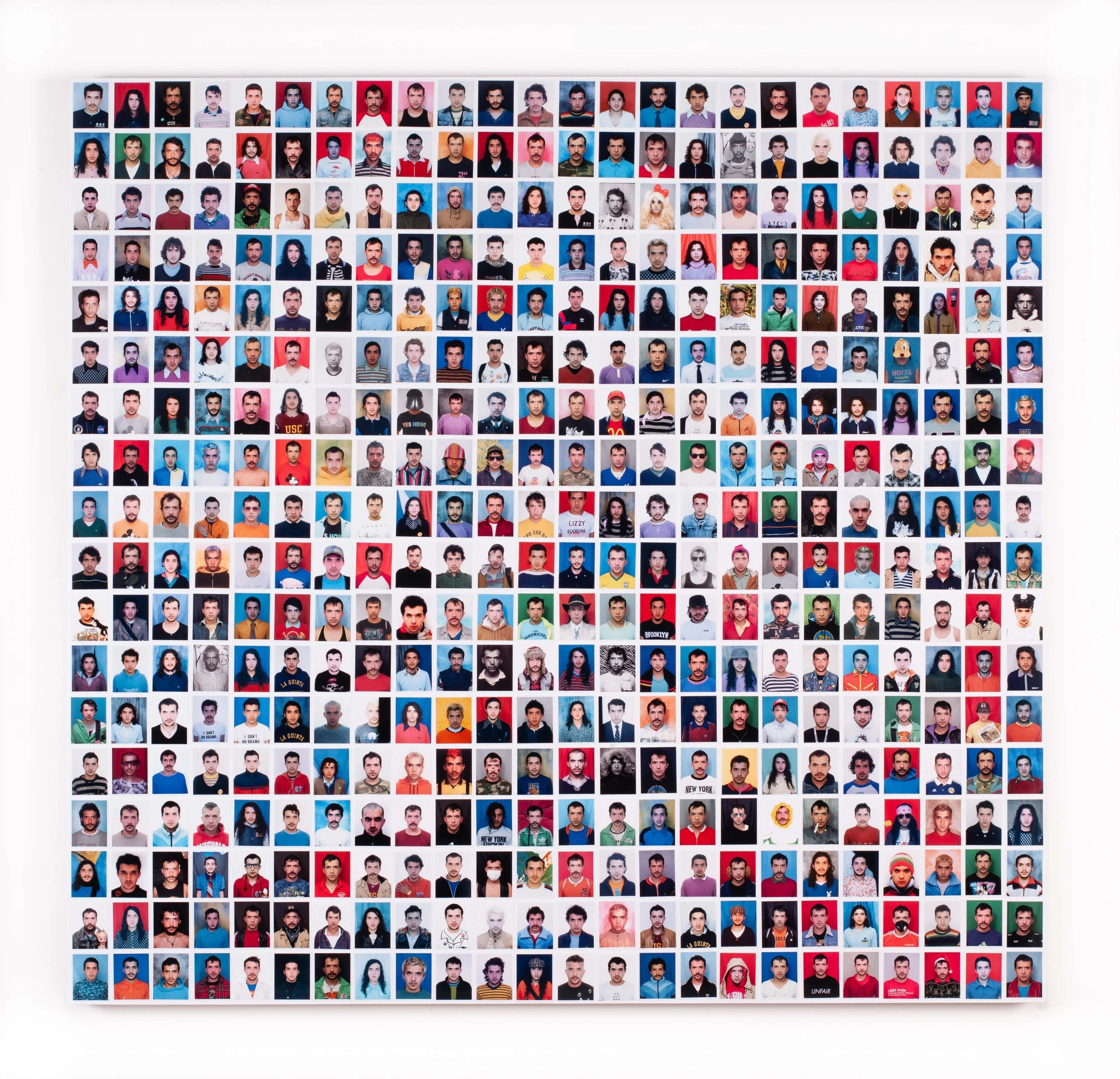
Mainly concerned with self-portraiture, his work is multi-faceted in the truest sense of the word. Echeverri’s oeuvre consists of a series of clearly demarcated cycles of images and videos with each cycle being both visually distinctive and endowed with a surprising formal stringency, challenging fixed notions of the self and even the contours of truth and deception, identity and masquerade.
“I envision myself as a medium to let ‘others’ exist. I have been fantasizing about being ‘anything’ but myself.”
Juan Pablo Echeverri
The renowned Colombian artist made the human body and face—usually his own, gussied up or dressed down, photographed, videotaped, and made unrecognizable—the beginning and end of all his art. By taking daily pictures of himself from an early age on, he documented how outward appearance conveys inner transformation. In his practice, the multimedia artist explored stereotypes and cultural codes and his performances ran the gamut from the subtle to the overly affected, his characters often dangled between comedy and existential seriousness.
The constructed-ness of identity is the central theme of his many works. In the guise of a collector, Echeverri presented his audience with a multiplicity of personalities, which in their quantity and diversity demonstrated that both deviancy and the norm are social constructs. These are, in the best possible sense, carefree and sensuous works. Yet their profound appeal lies in their winsome authenticity and evocative detail.
Juan Pablo Echeverri (1978–2022) had lived and worked in Bogotá, Colombia. Recent solo exhibitions include a.o. Identidad Perdida. Between Bridges, Berlin (DE) / James Fuentes, New York (USA); miss fotojapón. Museo de Arte e Historia de Guanajuato, León (MX); miMundoscuro, Museo de Arte de Pereira (CO); APOCALIPSYNCH, Hutson Gallery, Provincetown MA (USA); miss fotojapón, Middlesbrough Institute of Modern Art, Middlesbrough (UK); you keep me hanging on, Antigua Casa Haiku, Barcelona (ES); miss fotojapón, Museum of Modern Art of Bogotá, MAMBO (CO). Echeverri’s work has been part of several group shows in galleries and museums around the world such as the Folkwang Museum in Essen, Germany; Klemm's Gallery in Berlin, Germany; The Photographers’ Gallery in London, England; The Havana Biennial in Cuba; Itaú Cultural in São Paulo, Brazil; The Museum of Modern Art in Bogotá, Colombia; and PS1 in New York, USA. His work appears in Phaidon’s 500 Self-Portraits and Latin American Artists, as well as Younger than Jesus: Artist Directory, among other publications, and is part of the art collections of MoMA in New York, Banco de la República in Colombia, CA2M in Madrid, Spain, Musèe Français de la Photographie in France, as well as other private collections.
More information on Juan Pablo Echeverri's work can be found on the websites of Juan Pablo Echeverri and Klemm’s. Please reach out to us for further questions and requests.
PLATFORM | THE MARICONNA T-SHIRT

THE MARICONNA T-SHIRT
Introducing Juan Pablo Echeverri’s MariconnA T-Shirt, an exclusive re-edition of the late Colombian artist’s own tee made in partnership with the artist’s estate.
Riffing on the iconic logo for the rock band Metallica, Echeverri created his own symbol re-appropriating a Spanish slur for “gay” and used it throughout his practice and on clothing he wore.
https://www.platformart.com/features/mariconna-tshirt-by-juan-pablo-echeverri
A Look at Hair from Diane Arbus to TikTok
From Afro, locs, braids or cornrows to bob, beehive or taper, hair is an integral part of our everyday culture and offers unlimited design possibilities. How we choose to show or hide, grow or shave our head, facial and body hair is an expression of our personality, but also of our affiliation to social, political, religious or cultural communities. We use hairstyles to communicate, optimise and conceal a part of our identity, to set ourselves apart or fit into a collective, and thus to send out messages – whether intentionally or unintentionally. In the everyday tension between intimacy and public representation, we use our hair to show our individuality, conformity, rebelliousness or solidarity.
The exhibition entitled Grow It, Show It! explores the historical, political and everyday cultural significance of hair through a wide range of historical and contemporary photographs, videos and film clips from art as well as fashion and social media.
Hoda Afshar, Laura Aguilar, Diane Arbus, Ellen Auerbach, AWA: la revue de la femme noire, BALAM, Jürgen Baldiga, Barber Turko, Carina Brandes, BRAVO, Nakeya Brown, Tessica Brown, Julia Margaret Cameron, Jim Carrey, Chaumont–Zaerpour, Heather Dewey-Hagborg, Rineke Dijkstra, Juan Pablo Echeverri, Anna Ehrenstein, Lotte Errell, Jason Evans, Rotimi Fani-Kayode, Samuel Fosso, Pippa Garner, André Gelpke, Weronika Gęsicka, Camilo Godoy, Nan Goldin, Ulrich Görlich, Henriette Grindat, Carola von Groddeck, Wolfgang Tillmans, Hank Willis Thomas, Marie Tomanova, Tunga, Danielle Udogaranya (Ebonix), Dorothea von der Osten, William Wegman, Tom Wood, Yatreda, Leyla Yenirce, Sheung Yiu…
SEP 15, 2024 – JAN 12, 2025
https://www.museum-folkwang.de/en/exhibition/grow-it-show-it
Museumsplatz 1
45128 Essen
T +49 201 8845 000
Museum Folkwang | GROW IT, SHOW IT!
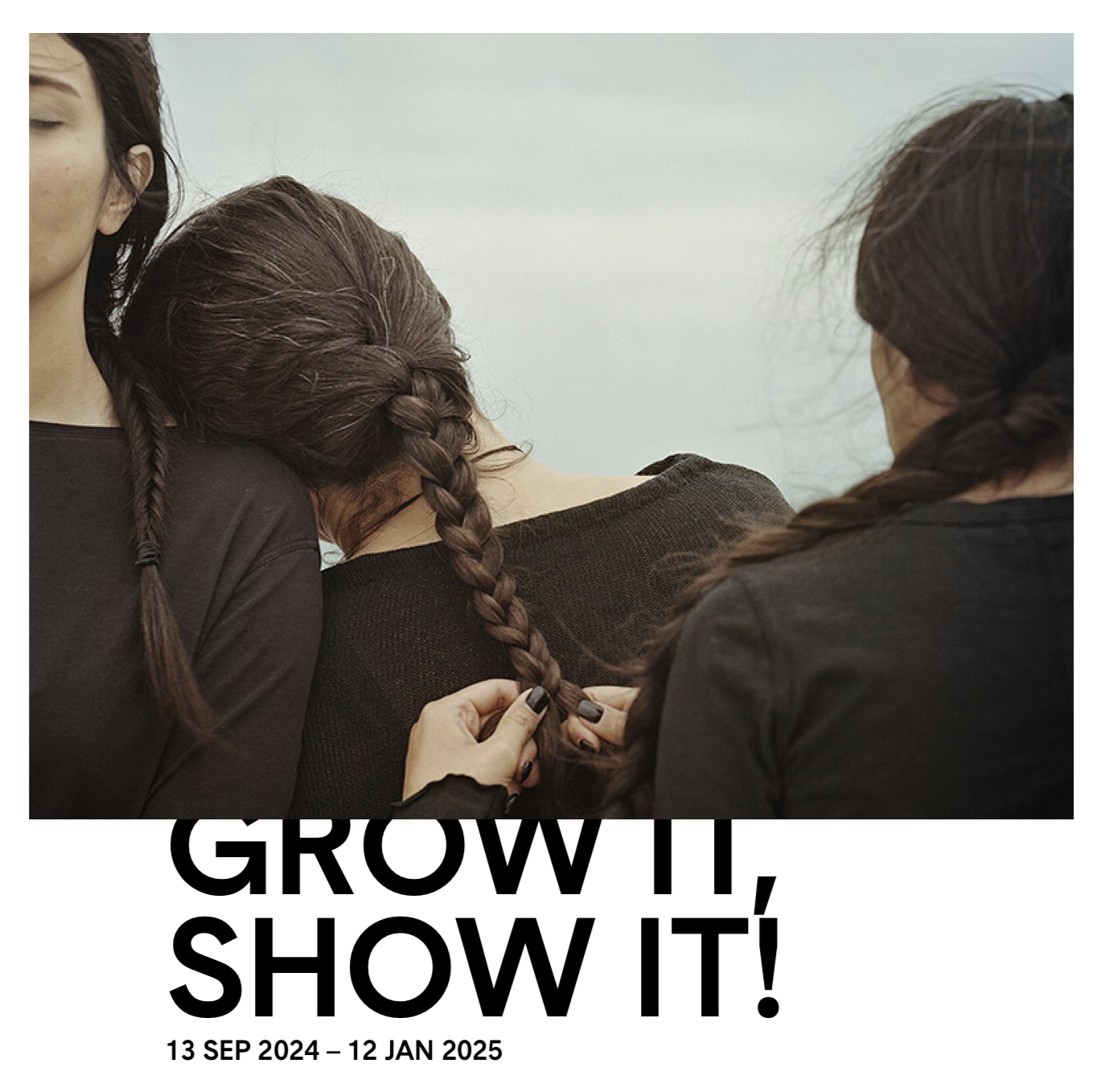
On Flourishing reflects exhibitions of the past eleven years at Klemm’s gallery in Prinzessinnenstrasse, opening tomorrow, Saturday APR 20, 2024, from 4—8 pm.
With the next, exciting chapter in the new gallery space about to start, we have decided to gather a selection of significant pieces that have inhabited these walls over the past years — each one a different, individual chapter of a shared history — now dialoguing together on the occasion of the very last group show hosted by Klemm’s Kreuzberg location. This celebration is not just a reflection of the past but a bridge to the future. It is an invitation to get together and celebrate not only the gallery’s history but also the vibrant community that shares our memories, emotions, and visions.
Viktoria Binschtok, Juan Pablo Echeverri, Keltie Ferris, Ulrich Gebert, Jan Groover, Elizabeth Jaeger, Sven Johne, Alexej Meschtschanow, Bernard Piffaretti, Émilie Pitoiset, Adrian Sauer
APR 20, 2024 – JUN 01, 2024
https://www.klemms-berlin.com/exhibitions/on-flourishing/
Prinzessinnenstraße 29
10969 Berlin, Germany
Opening hours
Tue–Sat 11 am–6 pm
KLEMM’S Gallery | On Flourishing
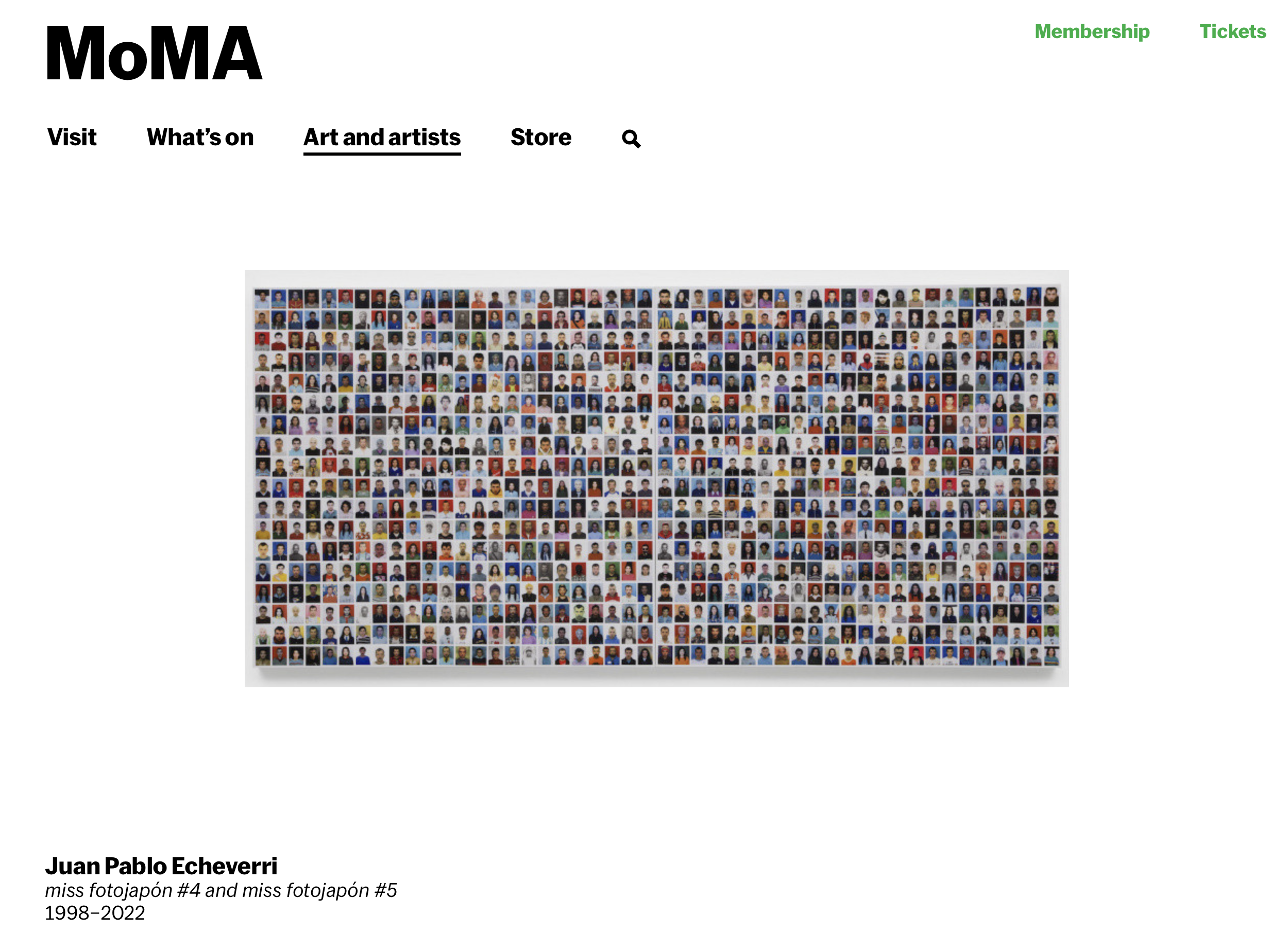
Juan Pablo Echeverri’s works miss fotojapón #4 and #5 are now part of the collection of MoMA - the Museum of Modern Art, New York.
Medium
Two collages with eight-hundred and sixty-four inkjet prints (diptych)
Copyright
© Juan Pablo Echeverri. Courtesy of the Juan Pablo Echeverri Estate
https://www.moma.org/artists/136619
Recent acquisition | MoMA - The Museum of Modern Art
KLEMM’S Gallery | The estate of Juan Pablo Echeverri
Representation of The estate of Juan Pablo Echeverri
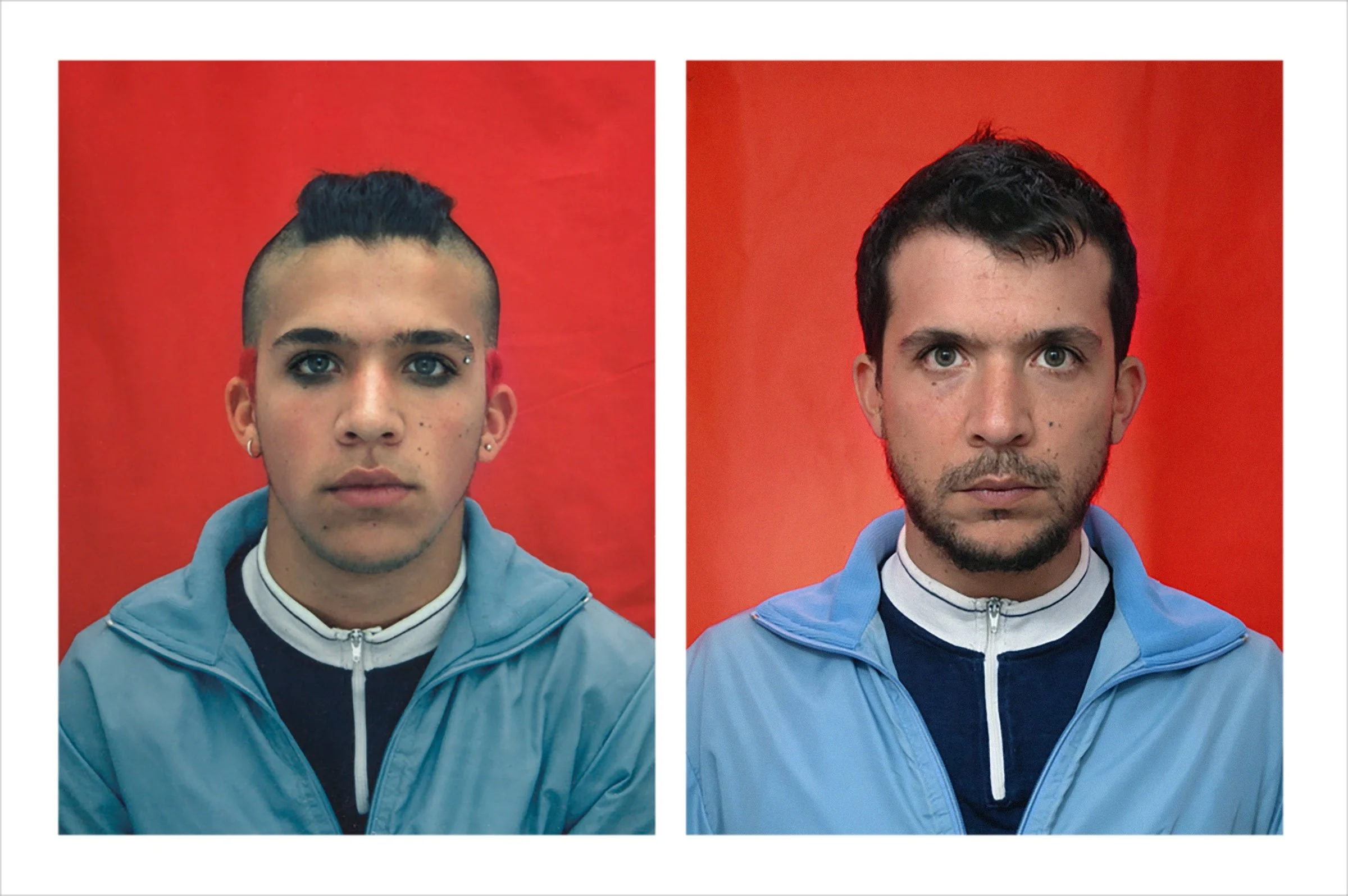
Klemm’s gallery Berlin is honored to announce the representation of the estate of Juan Pablo Echeverri!
Juan Pablo Echeverri (1978–2022 Bogotá, Colombia) was one of the most interesting voices among contemporary visual artists from Latin America. Mainly concerned with self-portraiture, his work is multi-faceted in the truest sense of the word. Echeverri’s oeuvre consists of a series of clearly demarcated cycles of images and videos with each cycle being both visually distinctive and endowed with a surprising formal stringency, challenging fixed notions of the self and even the contours of truth and deception, identity and masquerade.
Image: Juan Pablo Echeverri, from his series: miss fotojapón, 1998–2022
For more information:
https://www.klemms-berlin.com/artists/juan-pablo-echeverri/
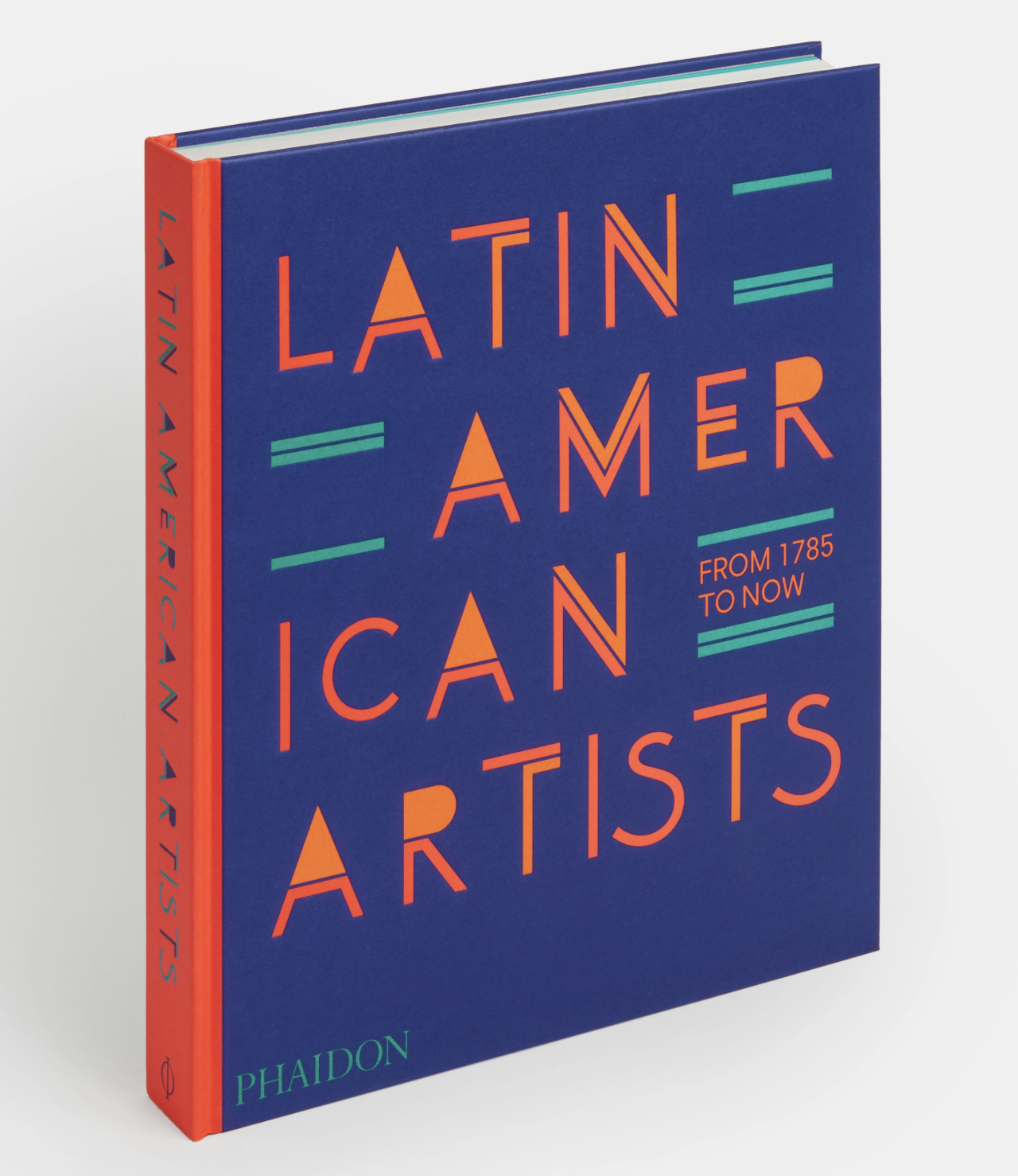
Phaidon Press | Latin American Artists: From 1785 to Now
Latin American Artists: From 1785 to Now
The essential survey showcasing the work of more than 300 modern and contemporary artists born or based in Latin America.
Latin American artists have gained increasing international prominence as the art world awakens to the area’s extraordinary art scenes and histories. In an accessible A-Z format, this volume introduces key artworks by 308 artists who together demonstrate the variety and vitality of artwork being made. Focusing on those born, or who have lived, in the 20 Spanish and Portuguese-speaking regions of Latin America, and featuring historic and living artists – both those celebrated internationally and names less-known outside their native countries – this book has been created in close collaboration with an expert panel of 68 advisors and writers.
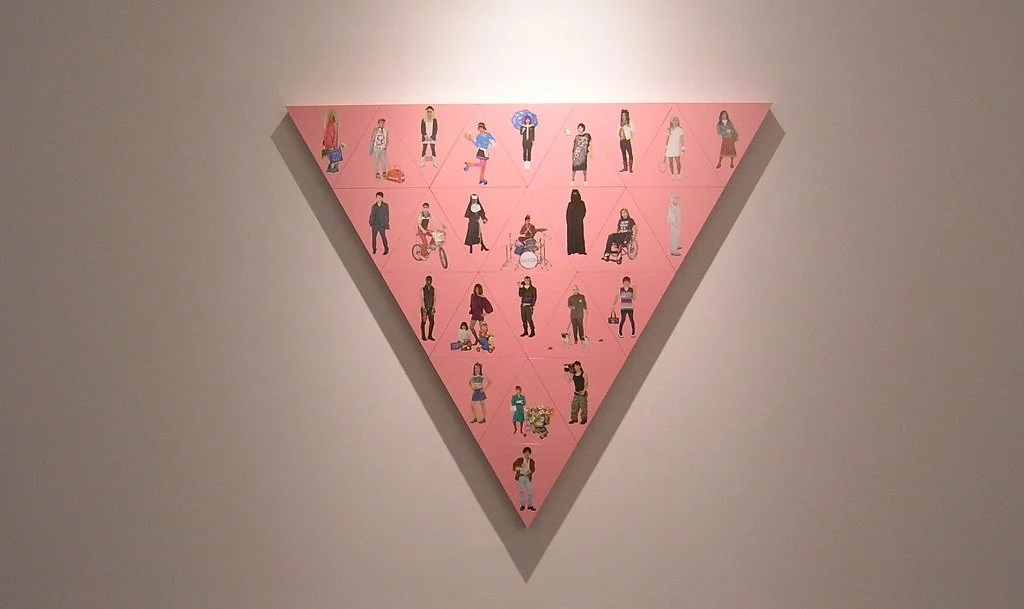
Madrid | Museo CA2M
Archipiélago de Lentejuelas
Juan Pablo Echeverri, La Chola Poblete, Lucía C. Pino, Andrés Senra, Manuel Solano, George Ton, Stoll Tadáskia, Osías Yanov y Inês Zenha
MAY 31, 2023 - JAN 7, 2024
Esta exposición es una muestra de la diversidad de género, en las colecciones Museo CA2M y Fundación ARCO, desde las poéticas de visibilidad LGTBI a las recientes estéticas trans. Archipiélagos de lentejuelas ocupa el espacio más público del museo, su planta baja, para constituir una celebración de la diferencia, la misma que cada año a comienzos de julio se celebra en la fiesta más grande de la capital de España: el Orgullo LGTBI+.
Museo Centro de Arte Dos de Mayo
Avda. Constitución 23
28931 Móstoles, Madrid
James Bantone, Nina Childress, Chelsea Culprit, Juan Pablo Echeverri, Barbara Hammer, Aurora Király, Hein Koh, Jean-Charles de Quillacq, Elle Pérez, Emilie Pitoiset, Davide Sgambaro, Nora Turato, Dena Yago
OBSELFED
JUN 24, 2023 – JUL 29, 2023
Prinzessinnenstraße 29
10969 Berlin, Germany
Opening hours
Tue–Sat 11 am–6 pm
https://www.klemms-berlin.com/exhibitions/obselfed/
Berlin | KLEMM’S
New York | James Fuentes
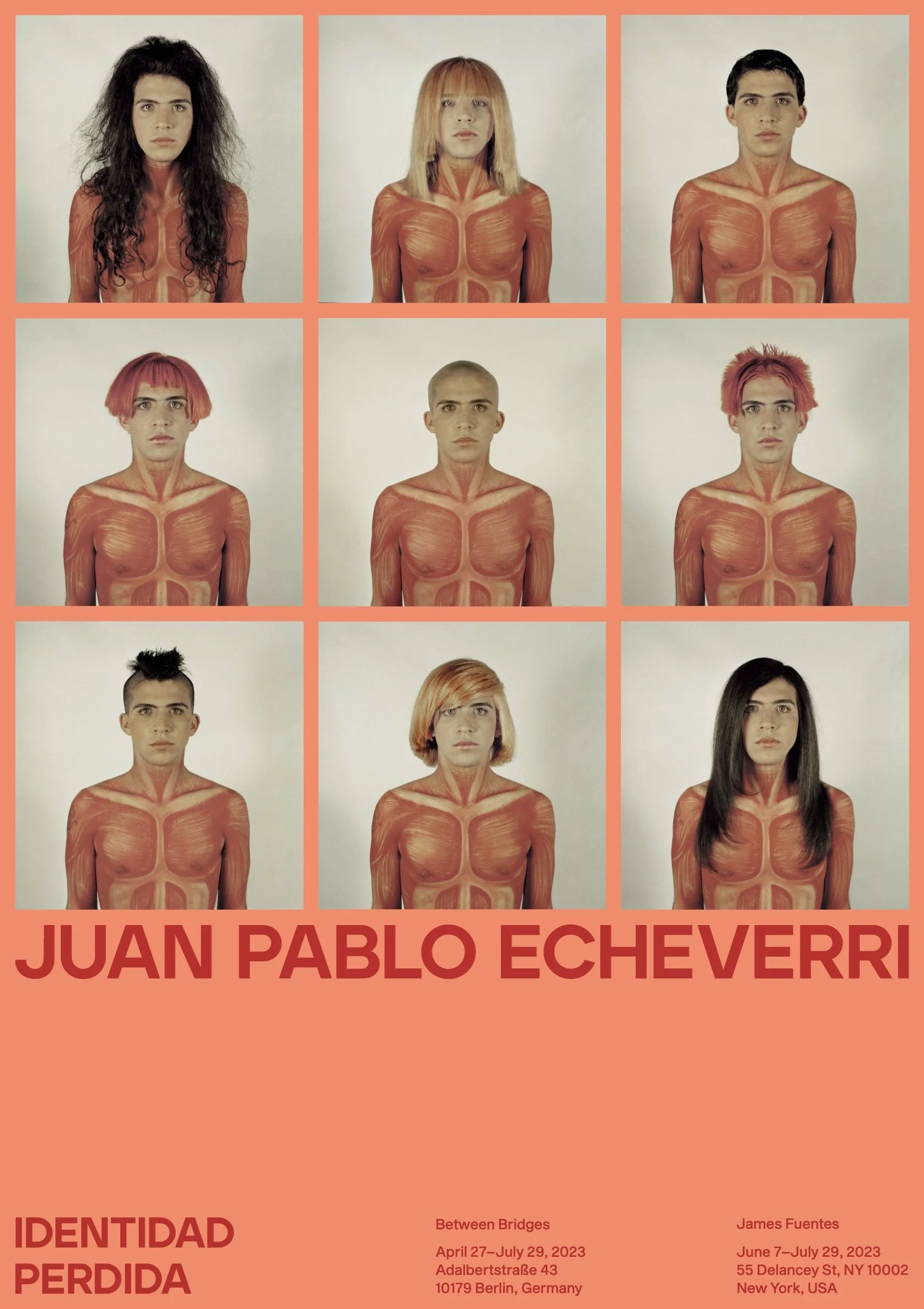
Juan Pablo Echeverri: Identidad Perdida
June 7 - July 29, 2023
James Fuentes
55 Delancey St, NY 10002
New York, USA
https://jamesfuentes.com/exhibitions/identidad-perdida
Berlin | Between Bridges
Juan Pablo Echeverri: Identidad Perdida
27 April–29 July 2023
Opening Hours:
Wednesday–Saturday
12–6pm
Adalbertstraße 43, 10179 Berlin, Germany
https://www.betweenbridges.net/exhibition-space/theses-on-hope/11-juan-pablo-echeverri
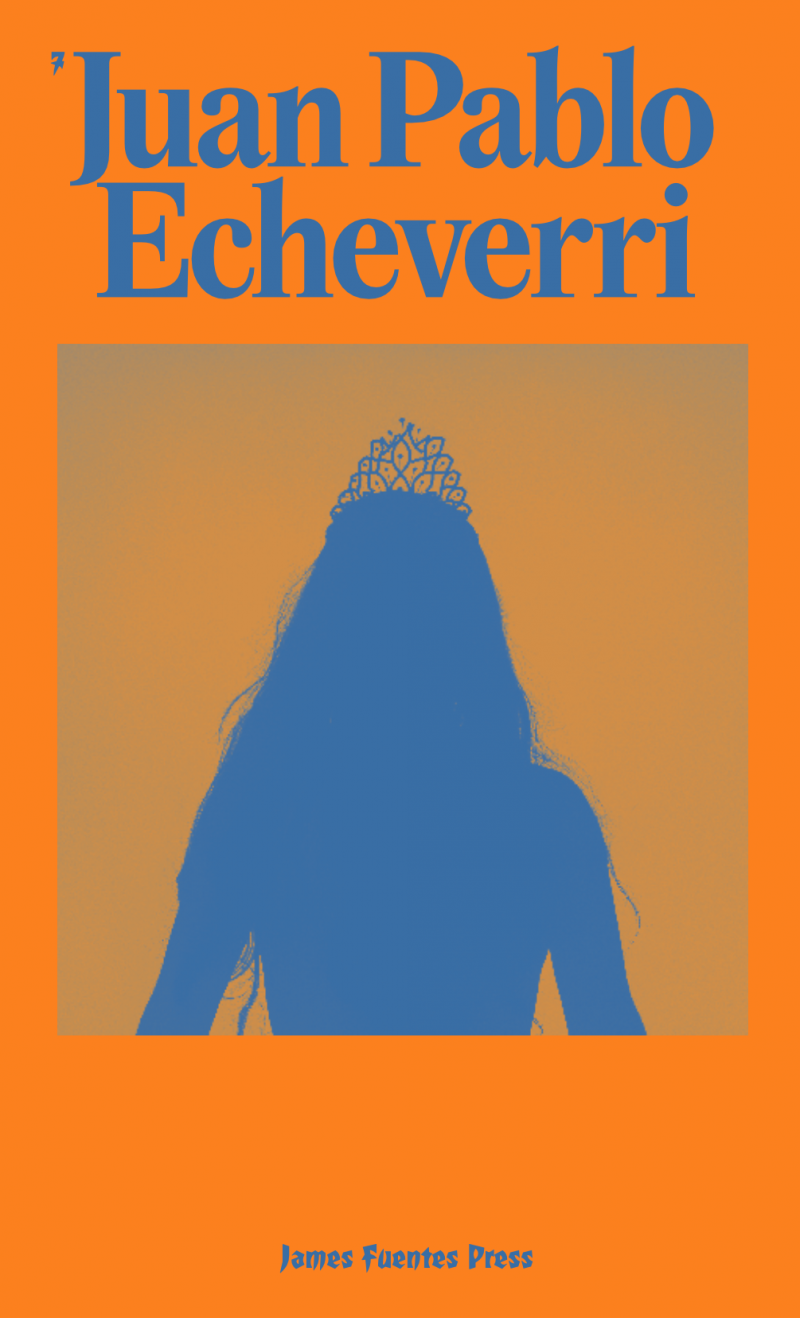
Juan Pablo Echeverri | James Fuentes Press
Surveying the visionary work of Colombian artist Juan Pablo Echeverri (1978-2022), this publication accompanies the exhibition Juan Pablo Echeverri: Identidad Perdida presented in two parts at Between Bridges, Berlin (April 2023) and James Fuentes, New York (June 2023). Detailing the wide-ranging work in both exhibitions, spanning his entire career, the publication features a foreword from Wolfgang Tillmans, a reprinted interview with the artist, and a new essay by Inti Guerrero.
British Journal of Photography | Juan Pablo Echeverri
Identidad Perdida [‘Lost Identity’] is a new show devoted to the work of Juan Pablo Echeverri, a Colombian artist who died suddenly last year of malaria.
Curated by Wolfgang Tillmans with some of Echeverri’s closest friends and family, it’s now open at Tillmans’ Between Bridges gallery in Berlin and is coming soon to the James Fuentes gallery in New York. The two-site exhibition gathers work made by Echeverri over the last three decades, and is both a tribute to the artist and a chance to get his work more widely seen – work that, says Tillmans, still hasn’t received its due. “In retrospect it has become clearer how important his work was, and how trailblazing,” he comments.
https://www.1854.photography/2023/05/tillmans-echeverris-lost-identity/
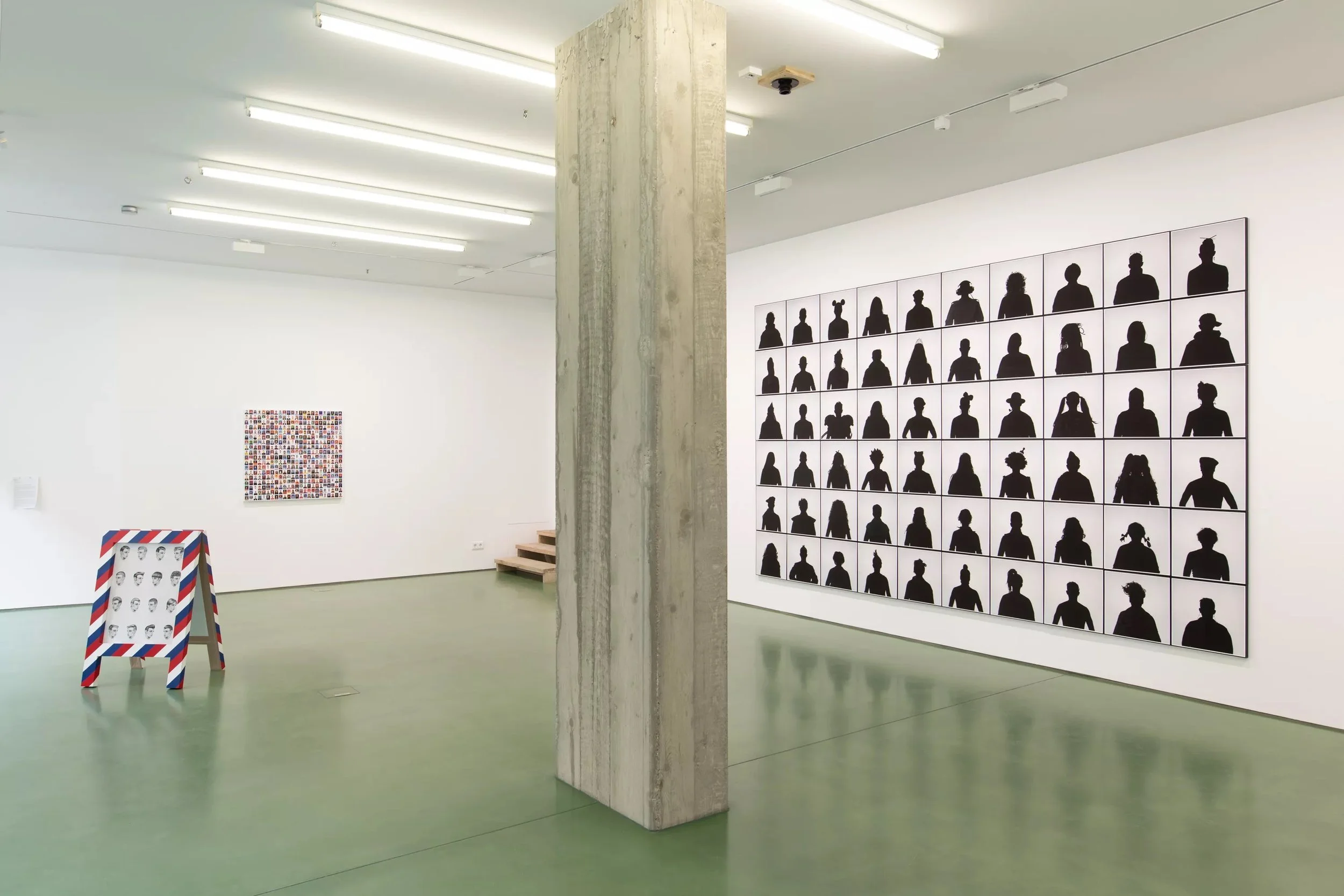
From left to right: MascuLady, 2006; miss fotojapón (1m x 1m #1 2023), 1998-2022; futuroSEXtraños, 2016
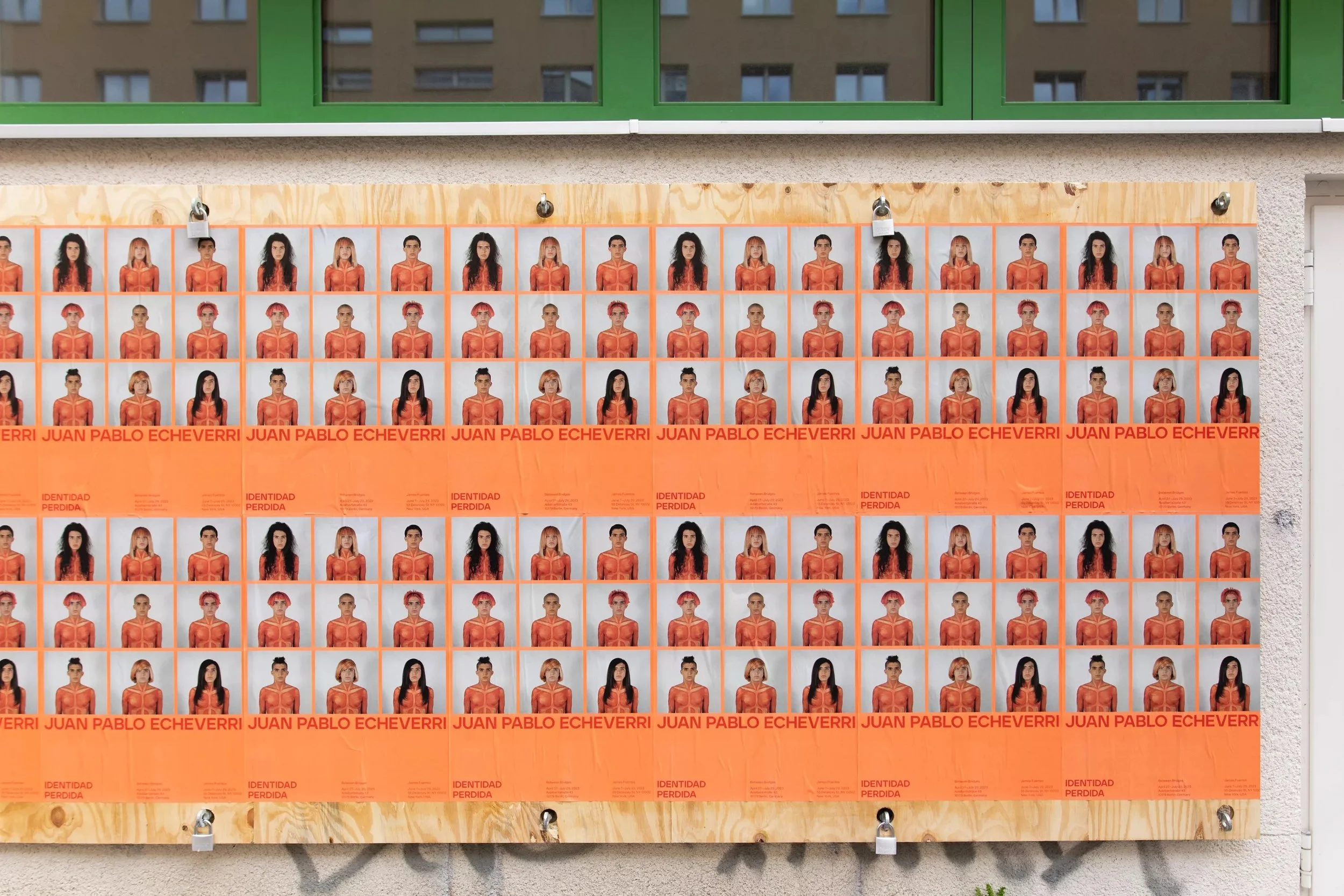
MUTILady, 2003 / 2023, offset print, 84,1 x 59,4 cm